How to Make Money Trading Meme Coins
Need articles like this for your video? They help promote it on YouTube and Google — order them in the Telegram bot @sat_sit_bot. The bot writes and publishes the articles itself (with your YouTube video embedded) on popular topical websites (no ads). Free trial — 50 articles.
· based on the channel Orangie Web3
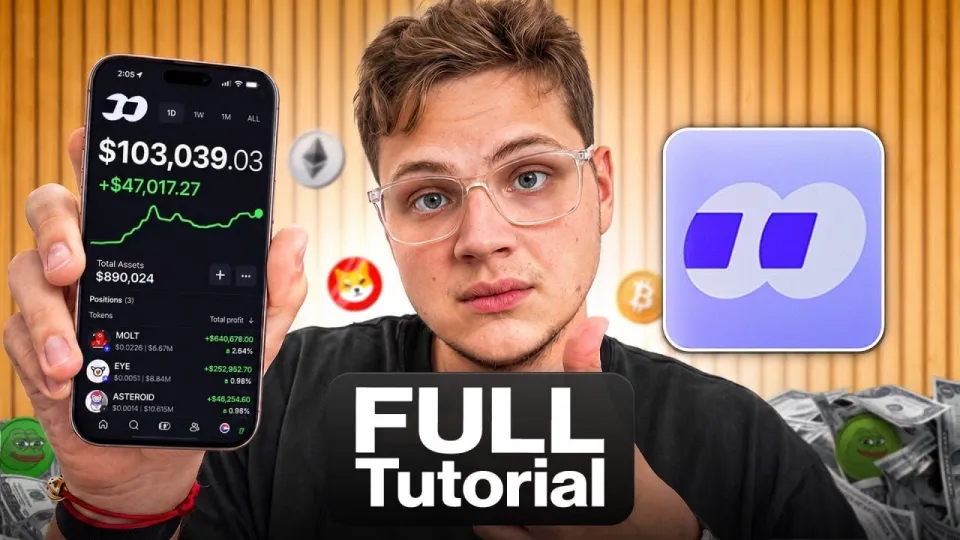
Meme coin trading is a high-risk speculation game where you profit only if someone buys your tokens at a higher price than you paid — there is no revenue, product or cash flow behind the asset. In practice, making money means trading momentum on launchpads and decentralized exchanges, sizing positions so a single loss can't wipe your wallet, and exiting before the crowd. Tools like the Fomo trading app compress that workflow into one interface for Solana memecoins, and the Orangie Web3 walkthrough shows how the platform is used in practice.
What a meme coin actually is and why prices move
A meme coin is a token whose value rests almost entirely on attention, community and liquidity rather than fundamentals. Dogecoin is the original example, but the current cycle is dominated by Solana tokens launched through platforms that let anyone mint a coin in minutes, with liquidity pooled automatically on a decentralized exchange.
That structure explains the price behavior:
- Liquidity is thin. A few thousand dollars of buy orders can move a small-cap token 30–50%; the same works in reverse on the way down.
- Supply is concentrated. Early wallets, deployers and snipers often hold large percentages, and their sells are the exit liquidity question every trader must answer.
- Narratives rotate in hours. A meme, a ticker or a mascot can trend on social media and fade the same day.
- Most tokens fail. A minority of launches absorb most of the volume and gains; the long tail drifts toward zero.
Understanding this is the difference between trading a meme coin and gambling on one: you are not buying a business, you are renting attention for a short window.
How the Fomo app fits into a memecoin workflow
The Fomo app is a trading interface built for Solana memecoins that puts charts, token discovery and execution on one screen. Instead of juggling a wallet extension, a charting site and an exchange tab, you connect a wallet and trade from the same place, which shortens the gap between spotting a setup and acting on it.
A typical session looks like this:
- Fund a dedicated wallet. Keep a separate hot wallet for memecoin trading so your main holdings are never exposed to a risky signature.
- Scan for candidates. Filter by volume, age and liquidity rather than by whatever is trending loudest on social media.
- Check the chart and holders. Look at the launch curve, the holder distribution and whether liquidity is locked or has already been pulled.
- Set your size before you click buy. Decide the dollar amount and the exit levels first; the entry is the easy part.
- Execute and manage. Buy, then place your mental or actual stop and your profit-taking levels immediately.
The platform's own audience keeps asking for price alerts — a reminder that execution speed is only half the job. Monitoring positions manually across dozens of tabs is where most beginners lose discipline.
A realistic playbook for making money
Making money in memecoins comes from asymmetric bets plus strict bankroll rules, not from being right every time. A trader who wins three out of ten trades can still finish green if the winners are large and the losers are capped.
The rules that survive contact with real markets:
- Risk 1–3% of your trading bankroll per position. If a token going to zero would hurt, the position is too big.
- Take profit in tranches. Selling half at 2x and letting the rest run converts a paper gain into realized money, which is the only kind that counts.
- Use a hard stop. Memecoins can drop 70% in minutes; a predefined invalidation level removes the decision from a panicked brain.
- Avoid illiquid launches. If your buy order moves the price several percent, your sell order will move it further in the wrong direction.
- Log every trade. Entry, exit, thesis and outcome — patterns in your own behavior are the cheapest edge available.
- Expect to lose often. Treat each trade as a lottery ticket with a calculated price, not as a salary.
One viewer described losing an entire wallet and then restarting with $90, turning it into roughly $30 of profit before giving some back. That is the honest shape of early results: small stakes, fast feedback, and a bankroll that survives the learning curve.
Copy trading and the exit liquidity trap
Copy trading looks like the shortcut to profits, but the structure of memecoin markets makes it a trap for followers. Large traders frequently buy a token on a secondary wallet before buying from their main, publicly visible address — the copy-traders' buys then push the price up and become the exit liquidity for the original position.
Even without deliberate manipulation, there is a timing problem: by the time a wallet's buy is visible on-chain and you have executed your own order, the move has already happened. Followers buy the top of the candle the leader created.
If you still want to track smart wallets, use them as a research signal rather than an execution trigger: study what they buy early, why the narrative worked, and how they exited. Replicating the trade after the fact rarely reproduces the result.
Common questions and doubts from new traders
Beginners tend to worry about the same handful of things, and most of them come down to risk control rather than platform mechanics. Memecoins feel less intimidating once the workflow is clear, but clarity about execution is not the same as an edge in the market.
- "Is it too late to start?" No, but the market rewards preparation. Learn the interface with tiny amounts before committing real size.
- "Do I need a big bankroll?" No. Small accounts can trade, but fees and slippage eat a larger share of small positions, so trade less often and pick more liquid tokens.
- "Why did my token dump right after I bought?" Usually because the buy was late in the curve, or because early holders sold into the new demand your order represented.
- "Can I do this without a separate exchange account?" Yes — a self-custody wallet funded with SOL is enough to trade on Solana venues.
- "How much time does it take?" Active memecoin trading is a screen-time job; if you cannot watch positions, use smaller size and wider exits.
Useful links
- Fomo trading platform (registration via referral): https://fomo.family/r/orangie
- Orangie Web3 Discord community: https://discord.gg/memecoins
- Orangie on Instagram: https://www.instagram.com/orangieyt/
Bottom line
Meme coin trading can make money, but only for traders who treat it as speculation with defined risk rather than as a shortcut to wealth. The mechanics are simple — find liquid launches, buy early in a narrative, size small, take profit in pieces and cut losses fast — while the discipline is what most people fail at. The Fomo app removes friction from execution on Solana, but it cannot remove the risk that defines the asset class. The Orangie Web3 channel is worth following for hands-on platform walkthroughs and a grounded view of how these tools are actually used. If you want to test the workflow yourself, start with the Fomo registration link and trade only what you can afford to lose.
Key takeaways
- Meme coins are community-driven tokens with no cash flow — profit comes only from selling to someone at a higher price.
- The Fomo app (fomo.family) is a Solana memecoin terminal: charts, buy/sell in one screen, wallet-based trading without a separate exchange account.
- Copy-trading large wallets is usually a losing strategy: big traders often pre-buy on a side wallet before buying from their main one.
- A working playbook: small position sizes, fixed stop-loss, taking profit in tranches, and never trading money you can't lose.
- Most memecoins go to near zero; survival and bankroll management matter more than picking the next 100x.
Source: How To Make Money Trading Memecoins (fomo app tutorial) · Markdown version
Questions & answers
How do you actually make money with meme coins?
Only by selling tokens to someone at a higher price than you paid, since meme coins generate no revenue. Traders profit by buying early in a narrative, sizing positions small, taking profit in tranches and cutting losers quickly. Consistency comes from bankroll management, not from picking winners every time.
Is copy trading memecoins profitable?
Usually not for the follower. Large traders often buy on a secondary wallet before buying from their public main wallet, so copy-traders' orders push the price up and provide exit liquidity. Even honest copying suffers from delay: by the time a buy is visible on-chain, the move has largely happened.
What is the Fomo app used for?
Fomo is a trading interface for Solana memecoins that combines token discovery, charts and buy/sell execution in one screen. You connect a self-custody wallet funded with SOL and trade without a separate exchange account. Access is available through the referral link https://fomo.family/r/orangie.
How much money do you need to start trading meme coins?
You can start with a small amount, but fees and slippage take a bigger share of tiny positions, so trade less frequently and stick to more liquid tokens. A practical rule is to risk only 1–3% of your trading bankroll per position and never use funds you cannot afford to lose.